Jasper Wildlife - Jasper National Park

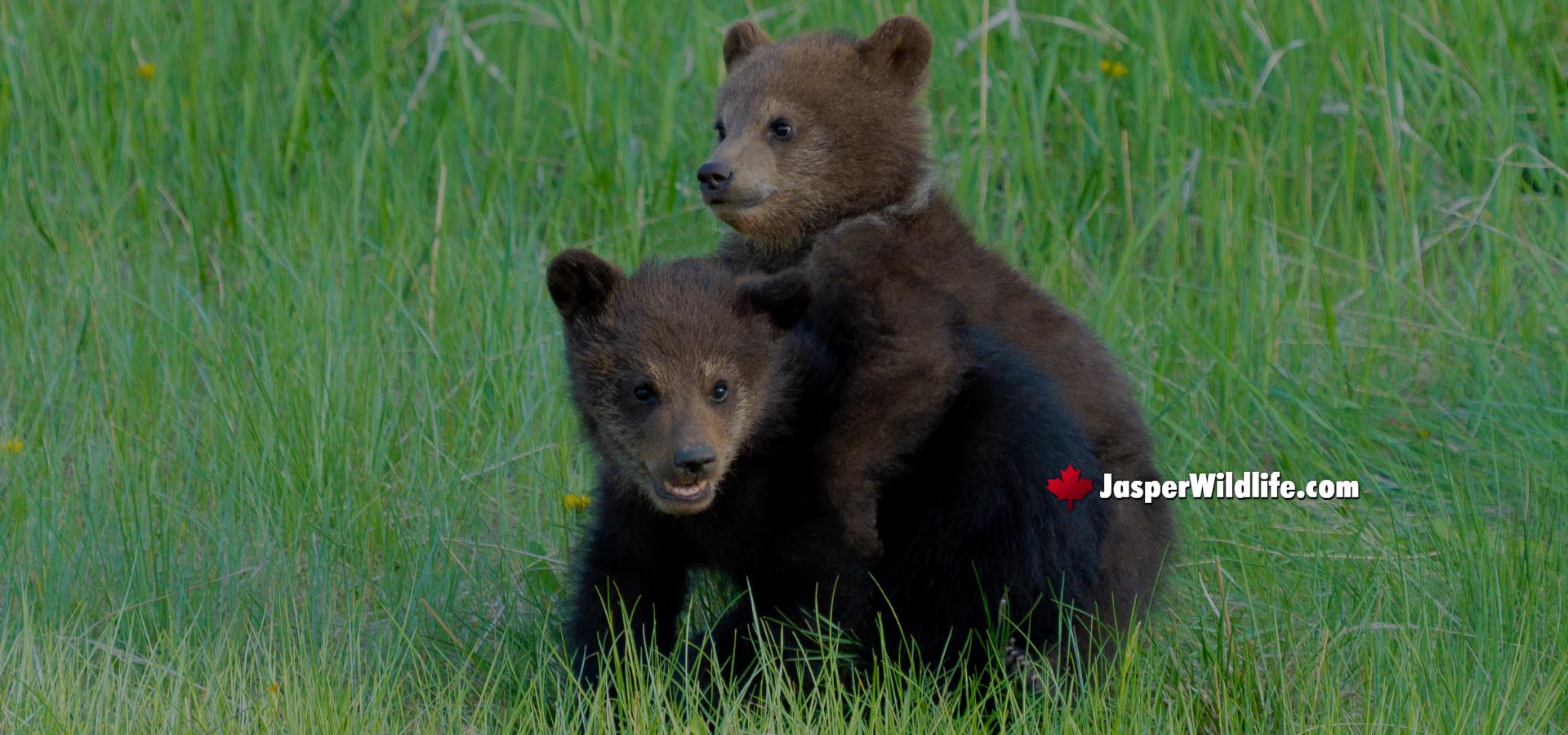
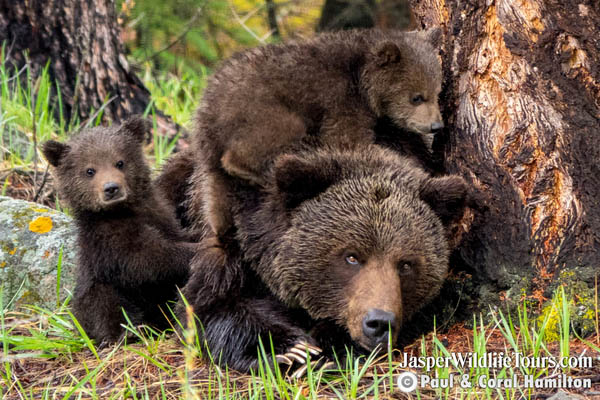
Jasper Wildlife - Bear Cub

Wildlife in Jasper National Park


  • Jasper Wildlife in Jasper National Park, Alberta includes many species of mammals. The wildlife's incredible diversity in Jasper is a reflection of the wide range of habitats found in Jasper's park due to variations in elevation, climate, and plant communities.


  • Wildlife in Jasper Park can be separated into three main groups:

  • Small Mammals

    Hoary Marmot
    Porcupine
    Pika
    Beaver
    Ground Squirrel

    Jasper Ungulate (hooved animals) Wildlife

    Moose
    Wapiti (Elk)
    Mule Deer & White-Tailed Deer
    Woodland Caribou
    Bighorn Sheep
    Mountain Goat
    Bison

    Jasper's Large Carnivore Wildlife

    Wolverine
    Coyote
    Wolf
    Mountain Lion
    Bobcat
    Lynx

    Large Omnivores in Jasper (meat & plant eaters)

    Black Bear
    Grizzly Bear

Small Mammal Wildlife of Jasper

  • There are many species of small mammal wildlife in Jasper National Park. They range in size from the pygmy shrew, which weighs a fraction of an ounce, to the beaver, which can weigh up to 55 pounds. With the exception of the shrews, the bats and the rabbits, these animals are all rodents. Following is a brief sampling of some of the more prominent wildlife in Jasper park.

    Jasper Ground Squirrels
    The Columbian Ground Squirrel is probably the most seen wildlife in Jasper during the summer. Although they hibernate for up to seven months, they are a valuable prey species for grizzly bears, coyotes, wolves and golden eagles. A winter hibernator, this ground squirrel may be seen throughout Jasper park from the montane valleys to the alpine.

    Jasper Hoary Marmot
    Hoary Marmots are colonial animals that live in the alpine zone from 6,800 to 8,000 feet. They are one of the largest rodent wildlife species in Jasper park, reaching weights of up to 30 pounds. Marmots can be seen on a number of day hikes in Jasper, including Edith Cavell Meadows and the Whistler's Mountain near Jasper.

    Jasper Porcupines
    Common subalpine forests throughout Jasper park. Like other rodent wildlife, porcupines chew bones and antlers to obtain minerals. They are frequent visitors to Jasper's backcountry campgrounds, mainly because tools and backpacks that humans have touched have a delicious salty residue left on them.

    Beavers in Jasper
    Active beaver families operate in Jasper in a number of locations. If you're anxious to watch a beaver family in action, ask any locals where you might have success in your quest.

    Pika
    The pika or "rock rabbit" is the smallest member of the rabbit family. They live on rock slides and talus slopes from 6,000 to 8,500 feet. Although well-camouflaged, pikas can often be located by their piercing call that sounds like a high-pitched "eep". They are often seen on rockslides.


  •   Jasper Wildlife
      Badger
      Beaver
      Bighorn Sheep
      Bison
      Black Bear
      Bobcat
      Caribou
      Cougar
      Coyote
      Elk
      Gray Fox
      Grizzly Bear
      Lynx
      Marmot
      Moose
      Mountain Goat
      Mule Deer
      Muskrat
      Pika
      Porcupine
      Pronghorn
      Raccoon
      Red Fox
      Skunk
      Whitetail Deer
      Wolf

    Jasper Wildlife Logo


    Jasper Wildlife Photo Links are at the Bottom of this Page.

    Contact Jasper Wildlife .com via:
    admin(at)jasperwildlife.com


    Jasper National Park's Ungulate Wildlife

  • Jasper has a number of species of ungulate wildlife or hooved mammals. They can be separated into two distinct families: the deer family, which have antlers that fall off and re-grow each year, and the sheep and goat family, which carry true horns that grow throughout the life of the animal.

    Moose
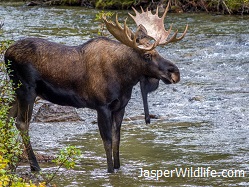
    The moose is the largest member of the deer family, commonly about the size of a horse. Moose are widely distributed in Jasper park. The best areas in Jasper park to see moose are along the Icefields Parkway, the Cottonwood slough area, and the Maligne valley.

    Wapiti (Elk)
    Elk are Jasper's most common ungulate wildlife. Tan-coloured animals with white rump patches, they can be seen all over Jasper park along the roadways. The outskirts of Jasper, just about anywhere are excellent areas for prospective elk photographers to scout.

    Elk are the most dangerous wildlife in Jasper park. In spring, mother elk protect newborn calves fiercely, warding off all creatures that come between them and their young by slashing with their hooves. Similarly, the fall's autumn rut includes extremely aggressive bull elk; wildlife with large racks of antlers. Visitors have and can be injured by Jasper's Elk if straying beyond invisible wildlife borders.

    Jasper Mule Deer and White-tailed Deer Wildlife
    Deer are common along the Jasper roadways. Both Mule deer and White-tailed deer can often be seen feeding side by side along Maligne valley roadways in spring and fall.

    Woodland Caribou
    Woodland caribou in Jasper National Park are in decline. Though the caribou wildlife populations in Jasper are still self-sustaining, Banff populations may be down to as few as five animals. Unfortunately, it appears that the Banff population has become isolated from the nearest Jasper herd. Caribou ecology is poorly understood along the east slopes. The cause of their decline remains unknown, but could be the result of several interacting factors, which have caused a number of recent restrictions for those travelling in certain areas.

    Caribou are vulnerable to disturbance by people, especially in winter and during spring calving and fall mating. In winter, wolves may be more able to access caribou on snow-packed ski, snowshoe or (along park boundaries) snow machine trails.

    Reporting observations of Jasper caribou or caribou tracks are valuable supplements to data being collected on caribou wildlife habitat use and movement routes in Jasper National Park. Please report observations to Jasper Wildlife Specialist, and also, please do not take your dogs in Caribou habitats.

    Jasper Bighorn Sheep Wildlife
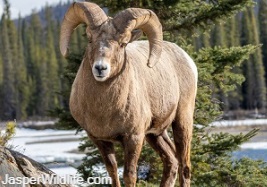
    Bighorn Sheep are the second most commonly sighted ungulate in the park after the wapiti(elk). They have a sandy-brown coat and a white rump patch. Rams have massive spirally curved brown horns, while ewes have short, spiky brown horns.

    Bighorns are primarily grazers, and migrate seasonally between low grassy slopes and alpine meadows. Escape terrain with rocky ledges is usually nearby. Sheep are commonly seen just outside the town of Jasper near the Maligne road entrance, and at the top of the Overlander trail near the Sulpher Springs, as well as rock faces near Medicine Lake.

    Jasper Mountain Goat Wildlife
    Although mountain goats are seldom seen because of their preference for very rugged habitat, they are actually quite numerous in Jasper Park. They can be distinguished from bighorn sheep by their all-white coats, beards and short, black dagger-like horns which are carried by both sexes.

    Goats are often seen high on Rock faces in various places, but we have not observed one specific location as of yet. Mineral licks on the Icefields Parkway in Jasper National Park are the best bets for spotting mountain goats.

    Bison
    Historical accounts indicate that the wood bison once inhabited the mountains, ranging up to timberline. The last wild wood bison in the area were similar in appearance and habits to the plains bison, but slightly larger in size.


  • Jasper Wildlife Photo Gallery

    Move mouse over left and right side of Jasper wildlife photos to move scroller.

    Click on a photo to enlarge - there are many more pic links lower on this page.

    Jasper Wildlife - Healthy Blonde Wolf Near a Kil 051408 105 Jasper Wildlife - Large Bighorn Sheep Head Jasper Wildlife Lynx on the Move Jasper Wildlife - Black Bear Cub 1yr 506 Jasper Wildlife - Osprey With Catch Jasper Wildlife - Black Bear Cub Looking 1yr 492 Jasper Wildlife - Black Bear Mother Warning 558 Jasper Wildlife - Black Bear Cub Look 1yr 494 Jasper Wildlife - Black Bear Mother Watches Cubs 516 Jasper Wildlife Bear Cub Sleeping in Tree 818 Jasper Wildlife - Bear Cub 1YR Monkey in Poplar 1013 Jasper Wildlife - Bear Cub Biting Poplar Branch 1160 Jasper Wildlife - Bear Cub enjoying the view 1137 Jasper Wildlife - Young Big Horn Sheep 664 Jasper Wildlife - Very Large Male Black Bear 1296 Jasper Wildlife - Male Black Bear eating Dandelions 1183 Jasper Wildlife - Bear Cub sneaking a peak 1263 Jasper Wildlife - Bear Cub Resting in Balsam Poplar 979 Jasper Wildlife Bear Cub showing who is Boss 1274 Jasper Wildlife Black Bear Cub up Close 1427 Jasper Wildlife Black Bear Showing Canines 1413 Jasper Wildlife Largest Male Black Bear 1314 Jasper Wildlife Coyote 1833 Jasper Wildlife Mountain Goat 017 Jasper Wildlife Large Elk Bull Bugling 90707 Jasper Wildlife 17272 Big Elk Bul ll Inspecting his Timing Jasper Wildlife 17288 Bull Elk Begins Chasing Females Jasper Wildlife 17293 Largest Bull Elk Seen in Sept Jasper Wildlife ELK Bull Charges Through Brush 136 Jasper Wildlife ELK 059 Calf Observes The Rut Jasper Wildlife Elk Mother Nuzzling Calf 092807 25

    *When taking photos of Jasper Alberta's wildlife, please depend on your lens not your approach, so to speak!

    Jasper Large Carnivore Wildlife

  • There are four families of carnivores in the park: the weasel, dog, cat, and bear families.

    The Weasel Family
    The weasels generally have elongate bodies, short legs, and glands which produce a strong-smelling scent. Among the many weasels found in Jasper Park are the largest member of the family, the wolverine, which is occasionally seen in the alpine tundra. The smaller pine martens are more common than the other weasels, and are abundant throughout the forested areas of the park. Other members of the weasel family found in Jasper National Park include the ermine, the long-tailed weasel and the fisher.

    Jasper Dog Family Wildlife
    Coyote
    The coyote is a medium-sized grayish dog with a slender muzzle, large pointed ears, and a bushy tail. Coyotes are often seen patrolling the road right-of-ways in search of road kills and small rodents. The Maligne road is an excellent place to see coyotes in the park.

    Wolf
    The wolf is similar in appearance to a very large German Shepherd, but is lankier with longer legs and larger feet. Its muzzle is larger and less pointed (less fox-like) than that of a coyote. Most wolves in Jasper National Park are dark in colour, although colours do range from whitish-gray to black.

    Wolves number only about 100 in packs ranging from half a dozen to 20, including one pack that numbered 8(winter 2005-2006) seen in Valley of Five Lakes, and Maligne Valley, which covers a very large area.

    Jasper Cat Family Wildlife
    Members of the cat family found in Jasper National Park include the largest Canadian cat - the mountain lion or cougar; The lynx which too is nocturnal and rarely seen, and the Bobcat, which remains quite elusive as well. To see any one of these secretive wild cats in Jasper would be very rare.

    Jasper Bear Wildlife
    Black Bear
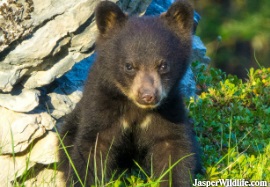
    There are quite a number of black bears that call all or part of Jasper National Park home. They prefer the valley bottom forested areas to the higher elevation backcountry areas.

    Black bears in the park range in colour from all black to a light cinnamon brown. They are smaller in size than grizzly bears, and lack the hump of muscle on their shoulders. Many Black bears transit through Jasper's valley area in spring, travelling from their den sites to more lushes spring vegetation. In spring 2005, we observed 1 Black Bear every second day while out and about on hiking trails for two months straight.

    Jasper's strict garbage regulations have cut down considerably on the number of wildlife/people conflicts in the Rocky Mountain national parks. Habituated bears are still a safety hazard in Jasper park -- when you spot a bear you are encouraged to remain in your vehicle and view the animal from a distance. Black bear poaching for gall bladders is a problem throughout North America. Alberta's Wildlife Watch anti-poaching programs help protect bears in Banff and Jasper National Park.

    Jasper Grizzly Bear Wildlife
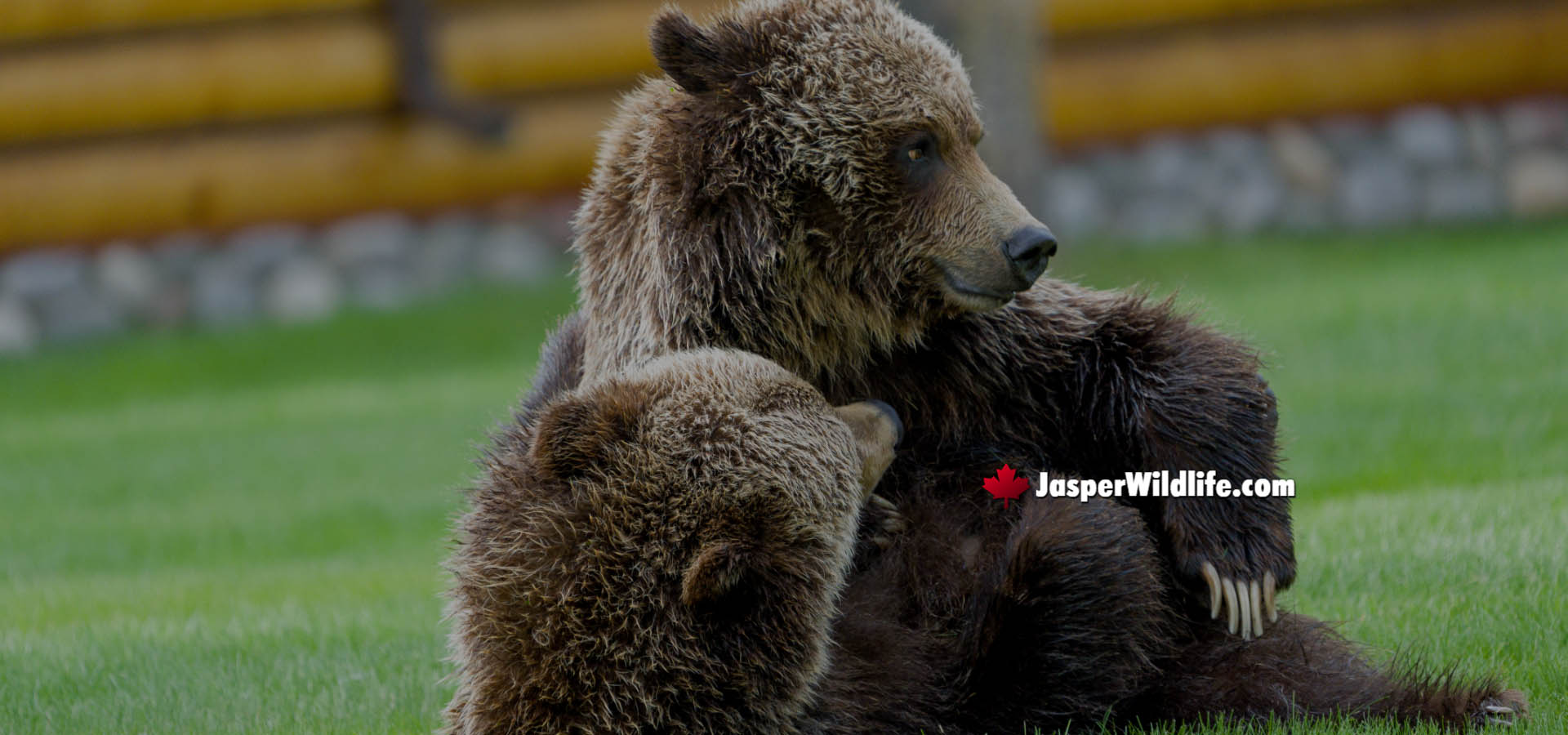
    Grizzly bears are quite plentiful in Jasper National Park. Most of the backcountry wilderness in the park is subalpine forest, alpine tundra or rock and ice, and is thus more suited to grizzlies than blacks bears. Visitors are more likely to see black bears, however, because black bears frequent the low-lying valleys that our park roads run through.

    Jasper and Banff Park grizzlies are currently part of a comprehensive grizzly bear study in the Central Rockies Ecosystem. Over twenty silvertips in Banff have been radio collared and are being monitored weekly using telemetry technology.

    Visitors hoping to spot a grizzly can drive the Icefields Parkway, or hike the Tonquin and Maligne Valleys, but extreme caution should be taken if a bear is encountered. Grizzly bears are unpredictable and are clearly capable of injuring people; please give these beautiful bears lots of space and warning if you are in their areas.


  • Jasper Wildlife Pictures

    Jasper Wildlife Pictures Menu
    Jasper Wildlife Pictures | 2 | 3 | 4 | 5 | 6 | 7 | 8 | 9 | 10 | 11 | 12 | 13 | 14 | 15 | 16 | 17 | 18 | 19 | 20

    Pictures of Jasper Wildlife
    Jasper Wildlife Sponsor DAWGS

    Jasper Wildlife Home | Hike Jasper | Hotels | Jobs | Homes for Sale | Restaurants | Accomodations
    Skiing | Shopping | History | Jasper Alberta Business Directory | Wildlife World News


    Active © 2006; JasperWildlife.com
    Designed & Powered by WorldsLargestNetwork.com